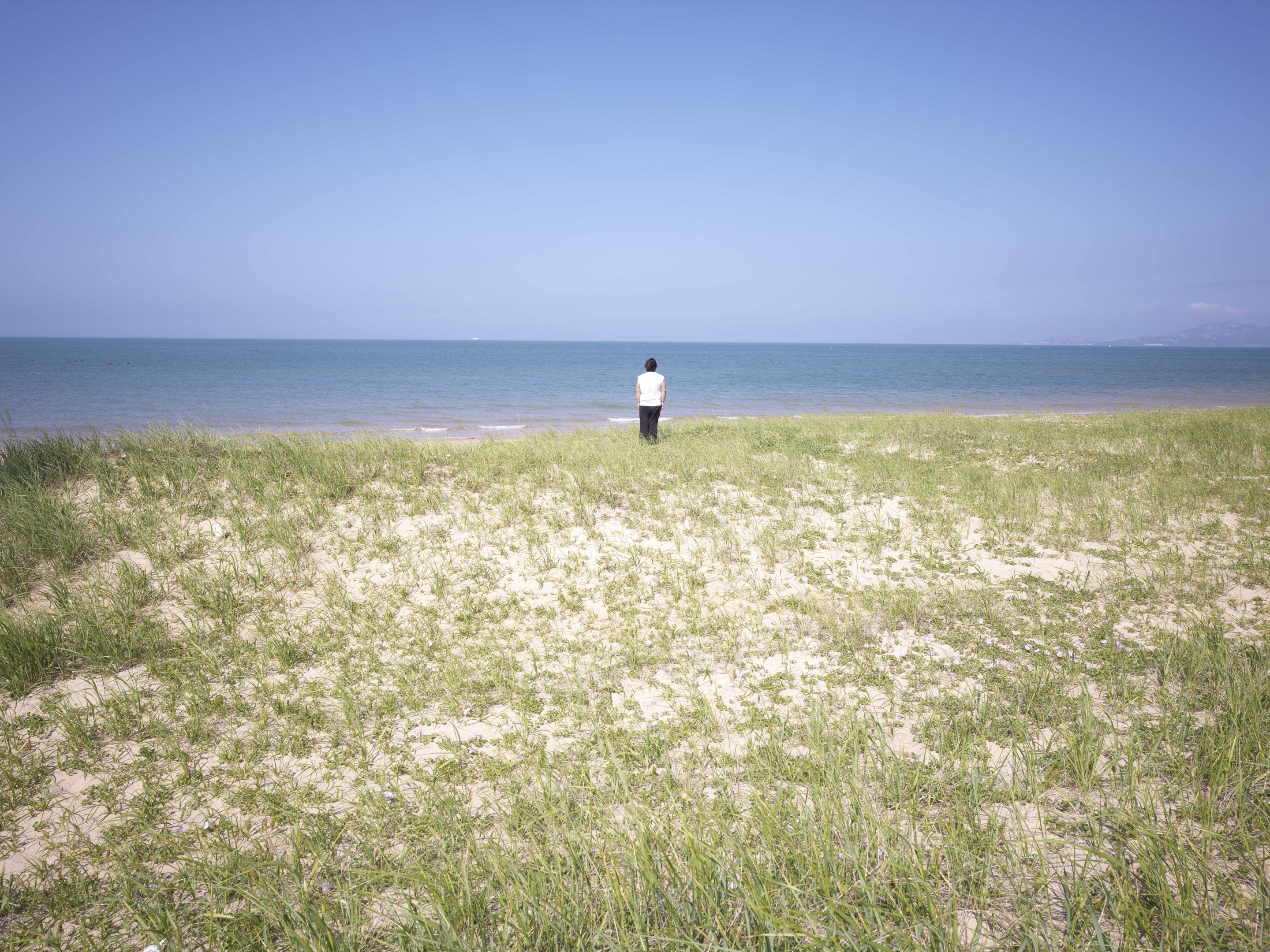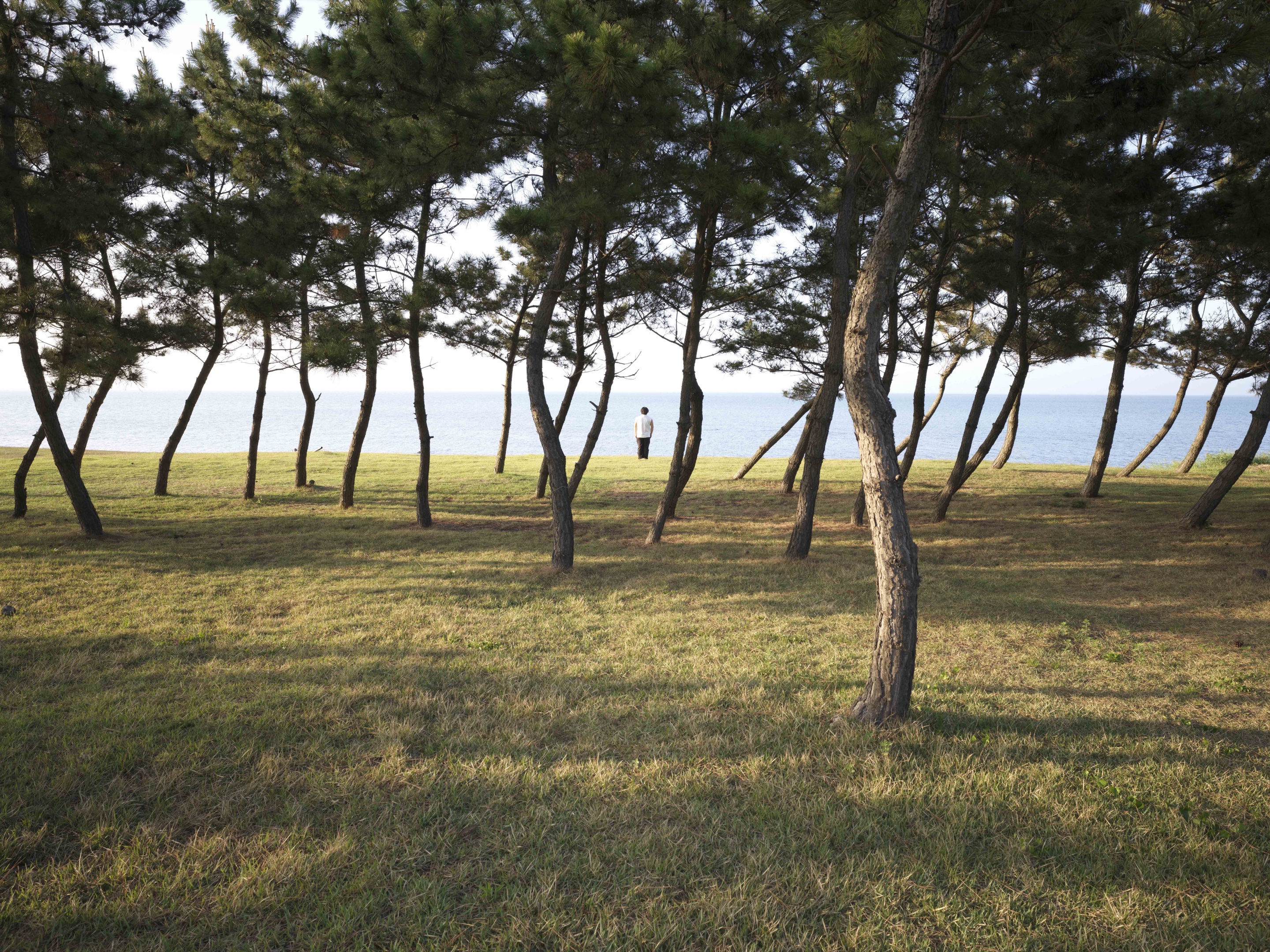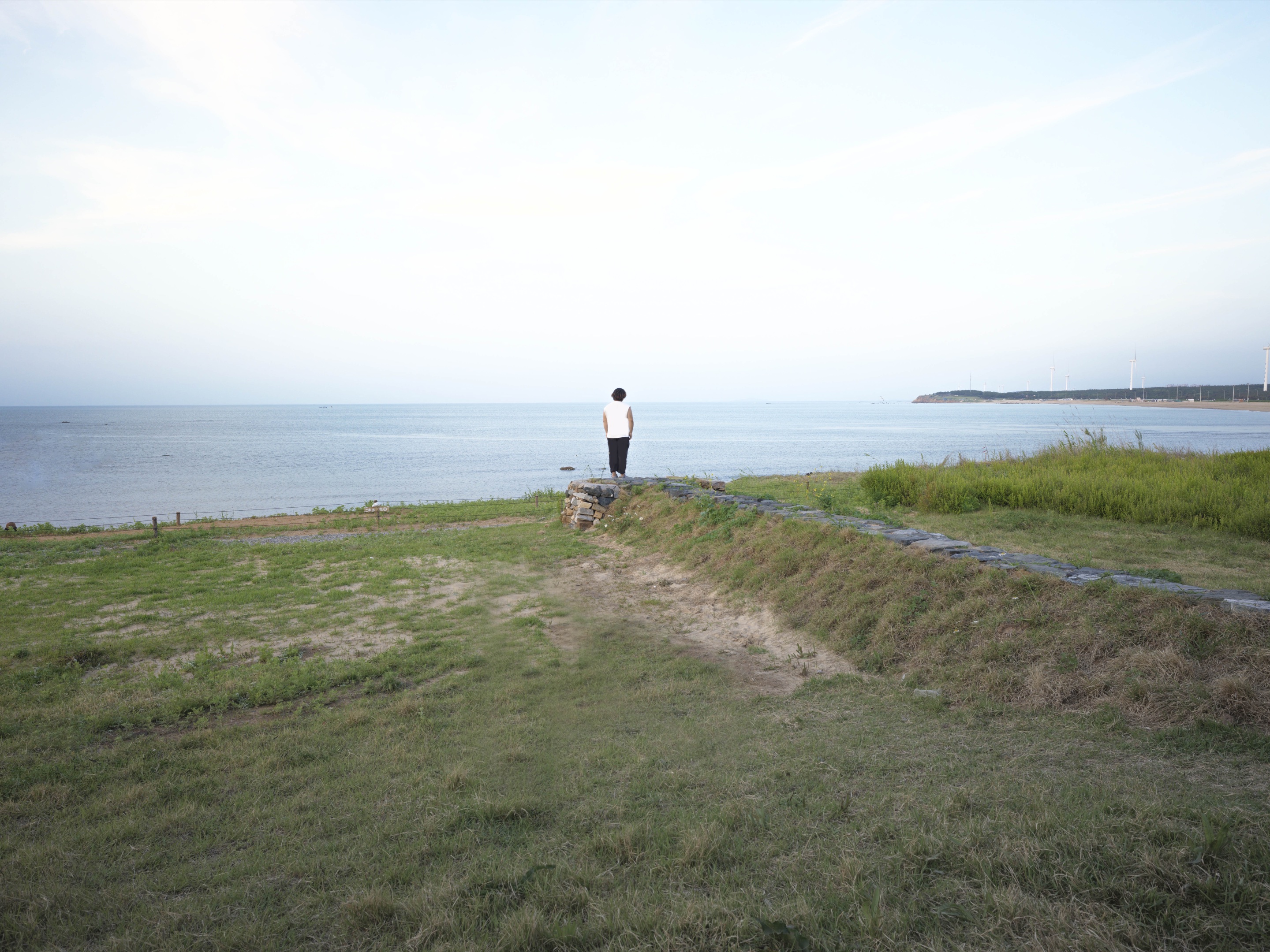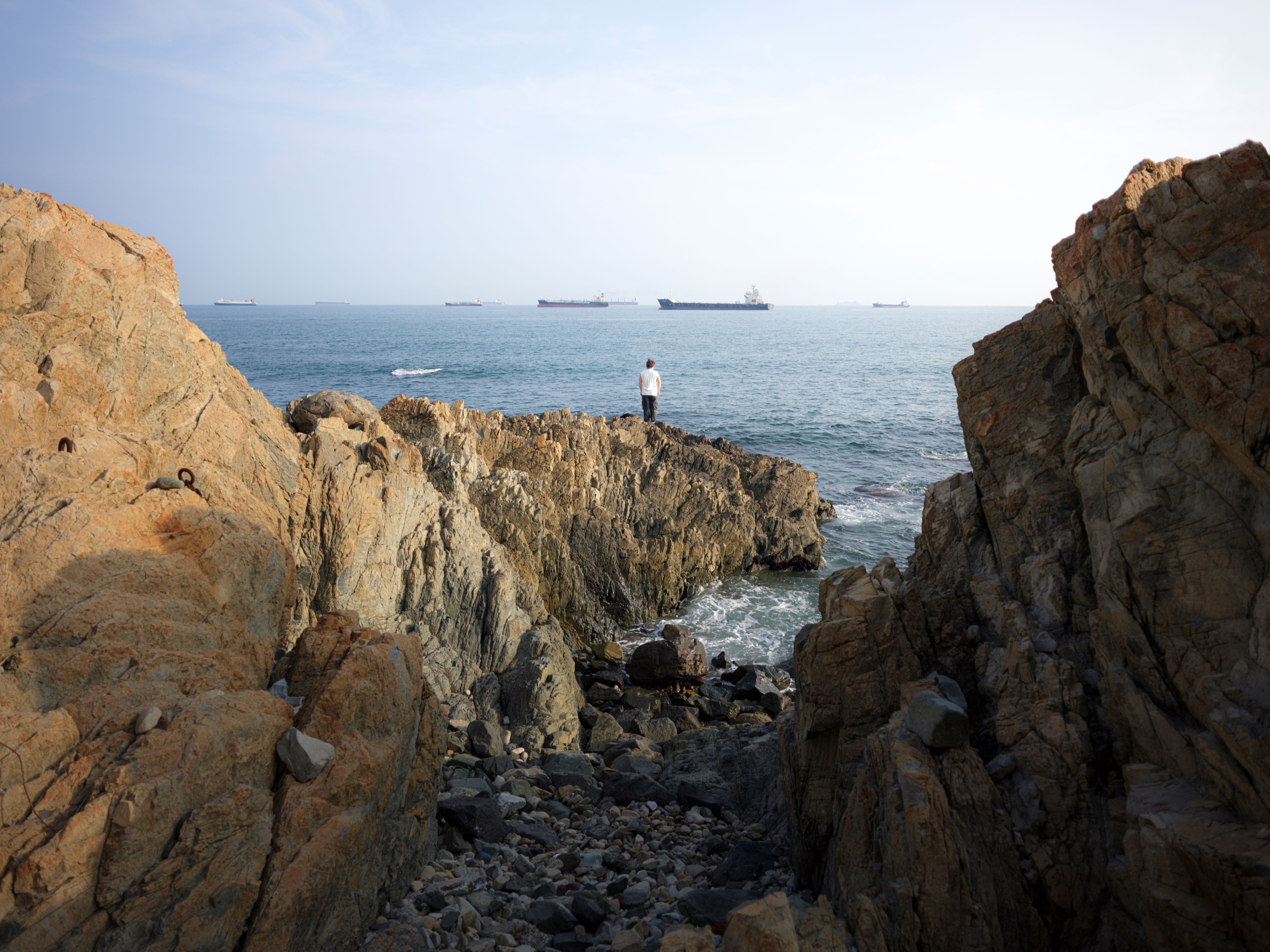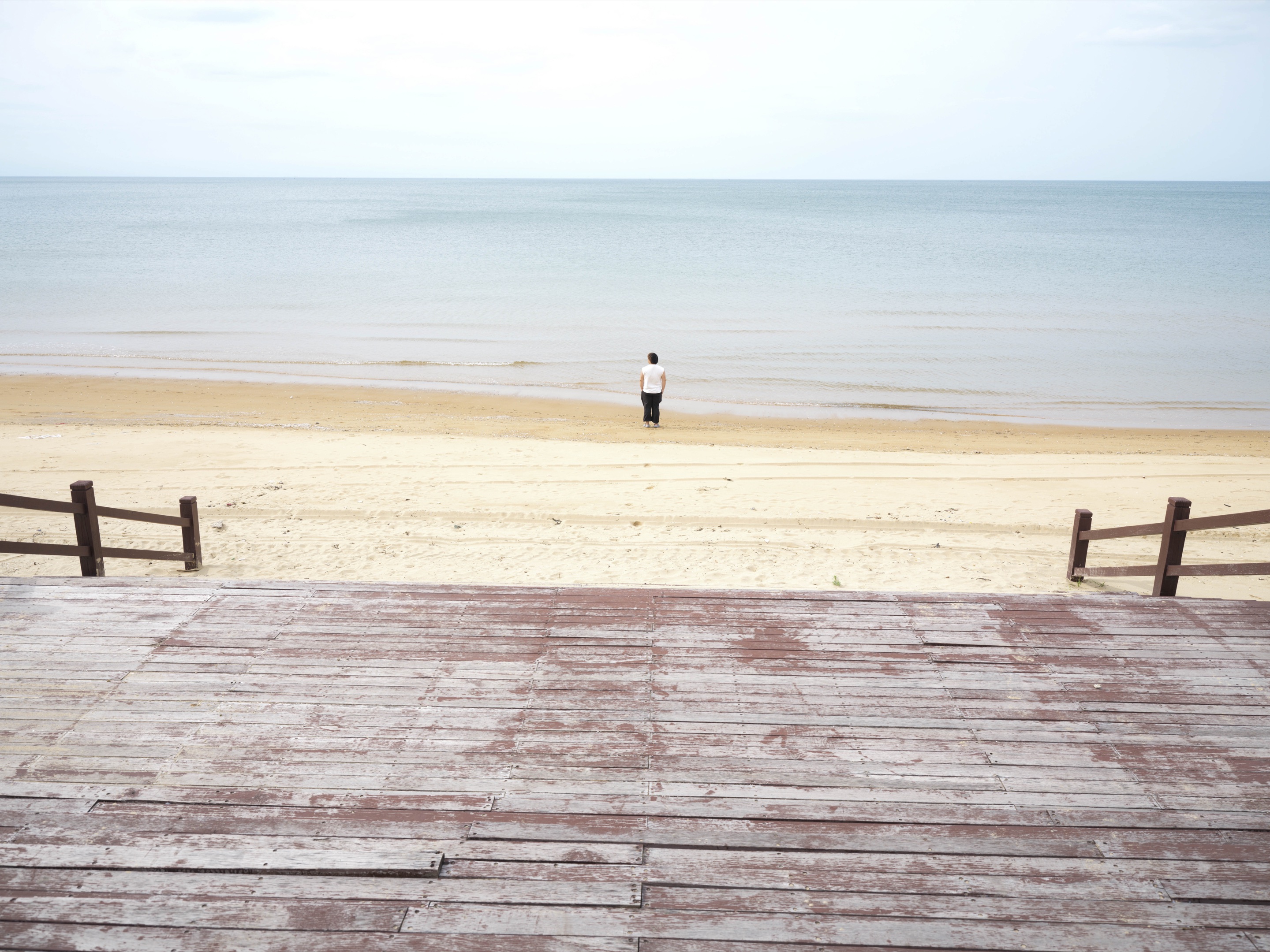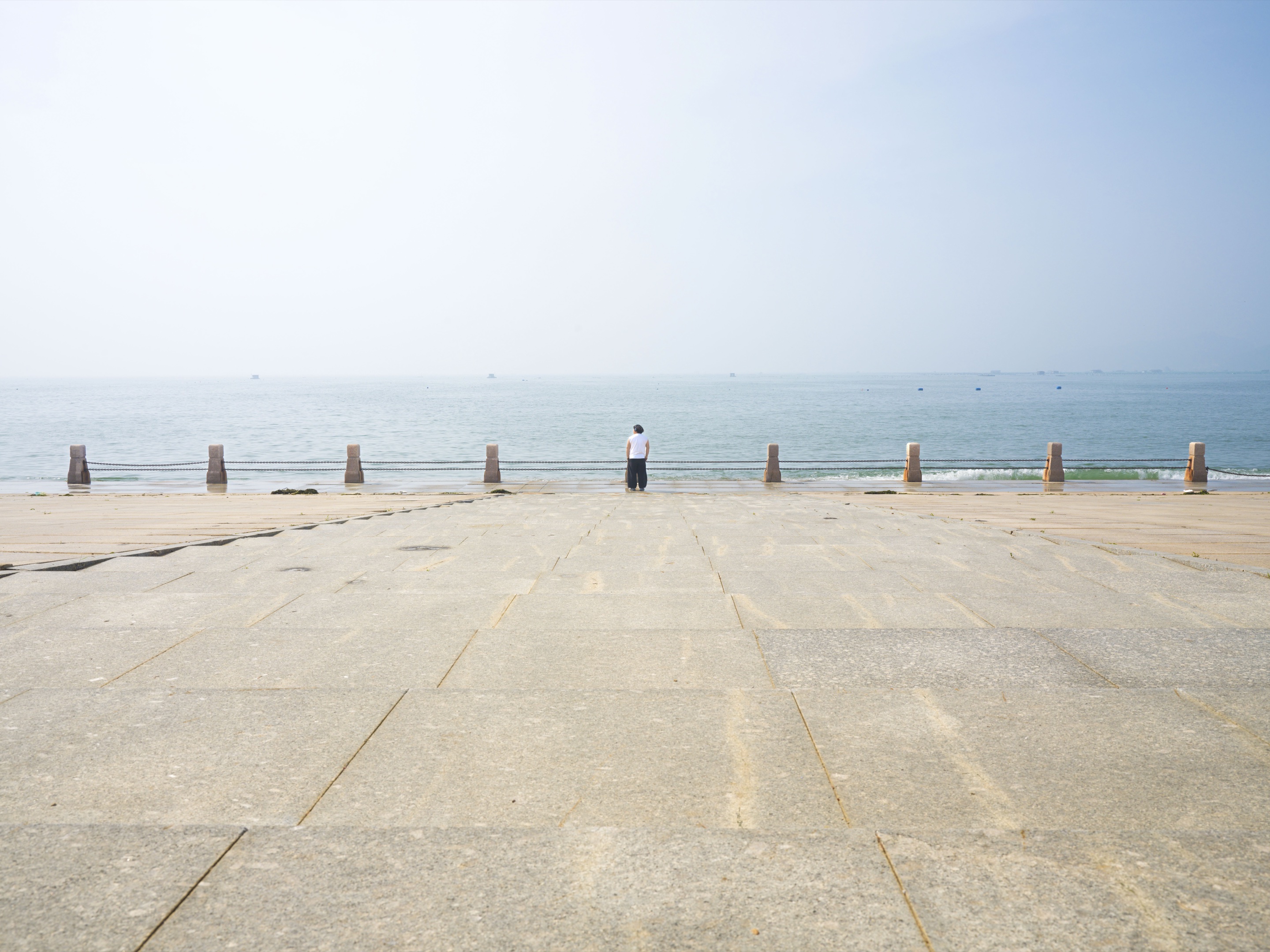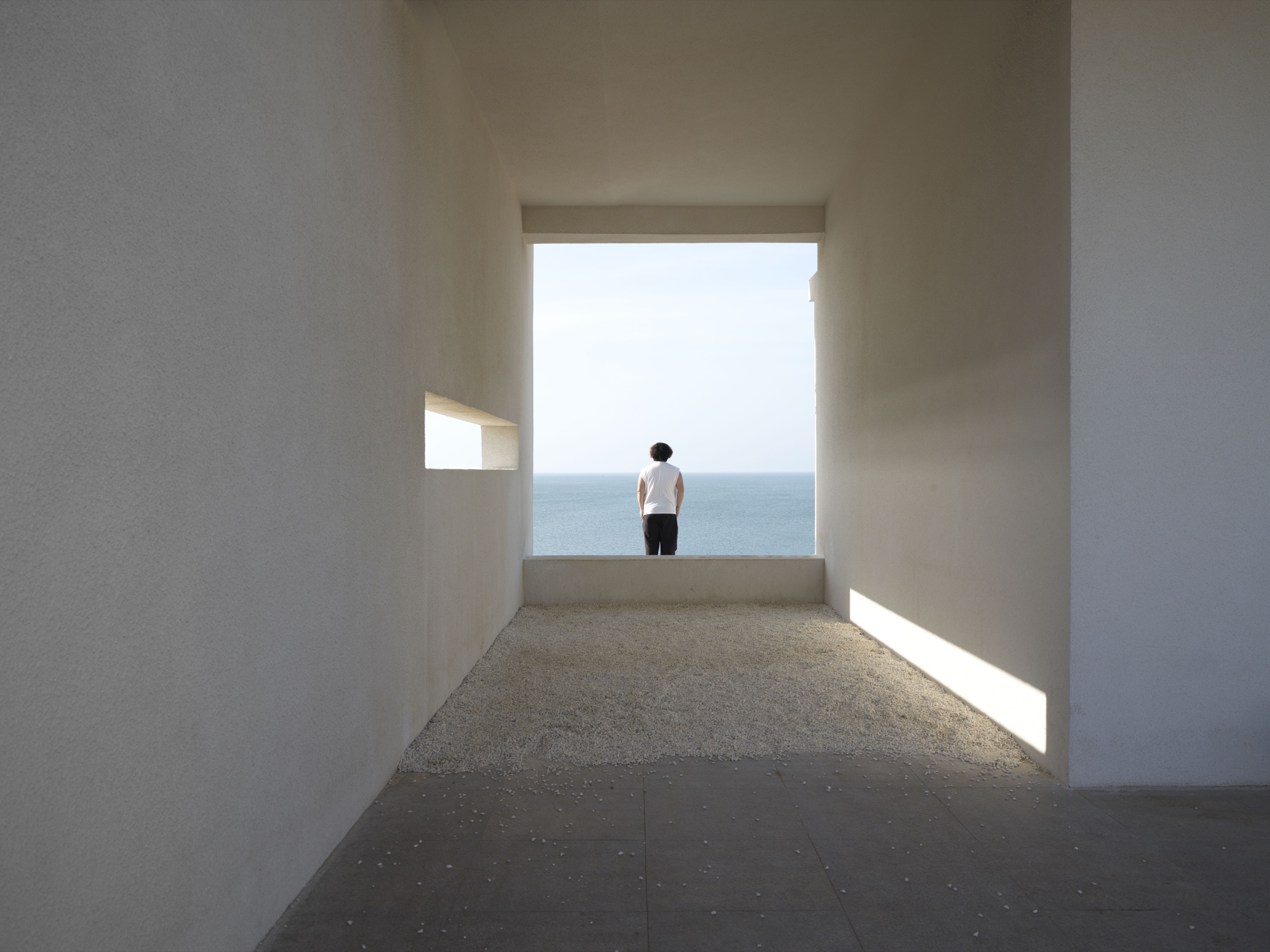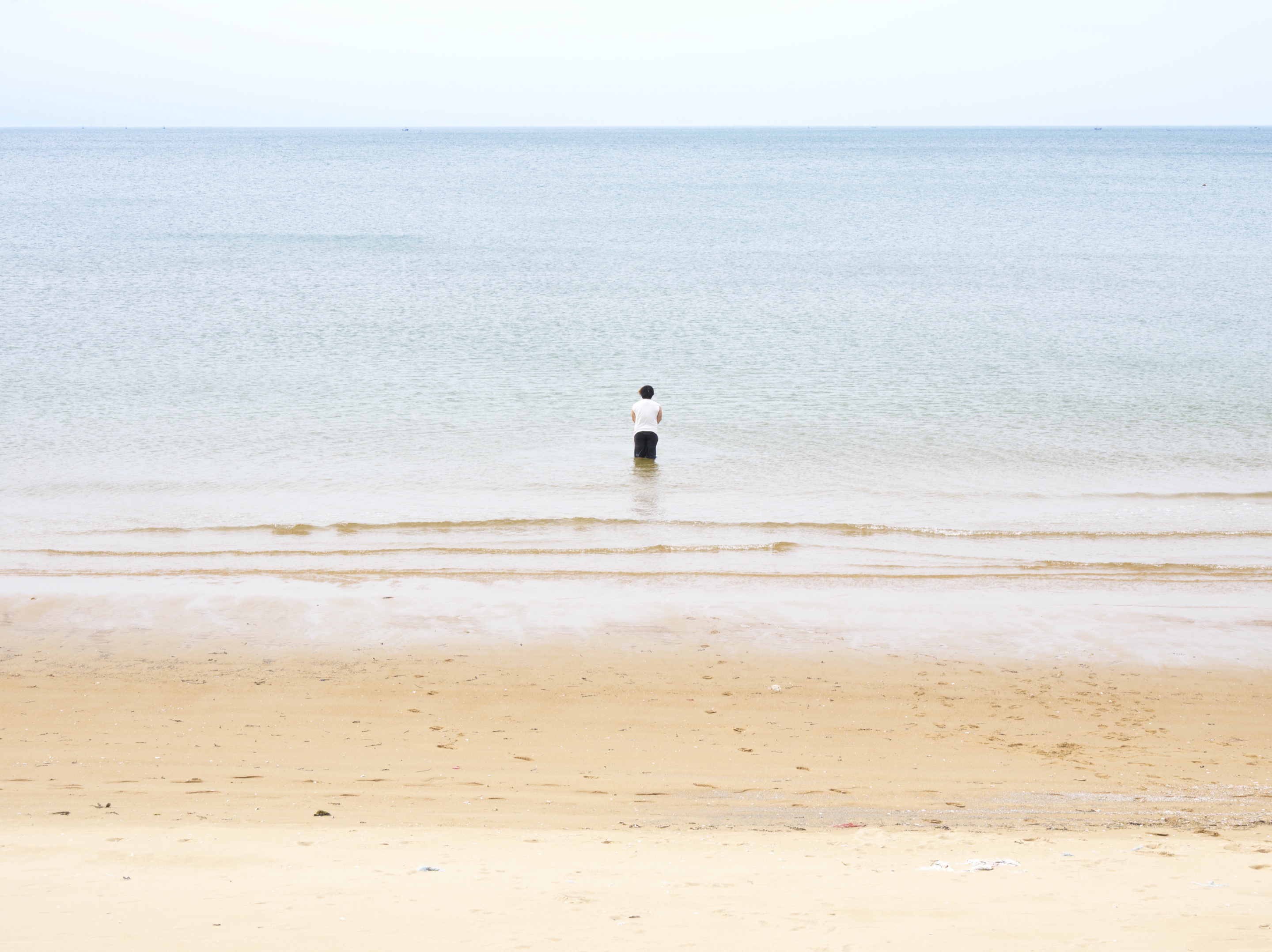
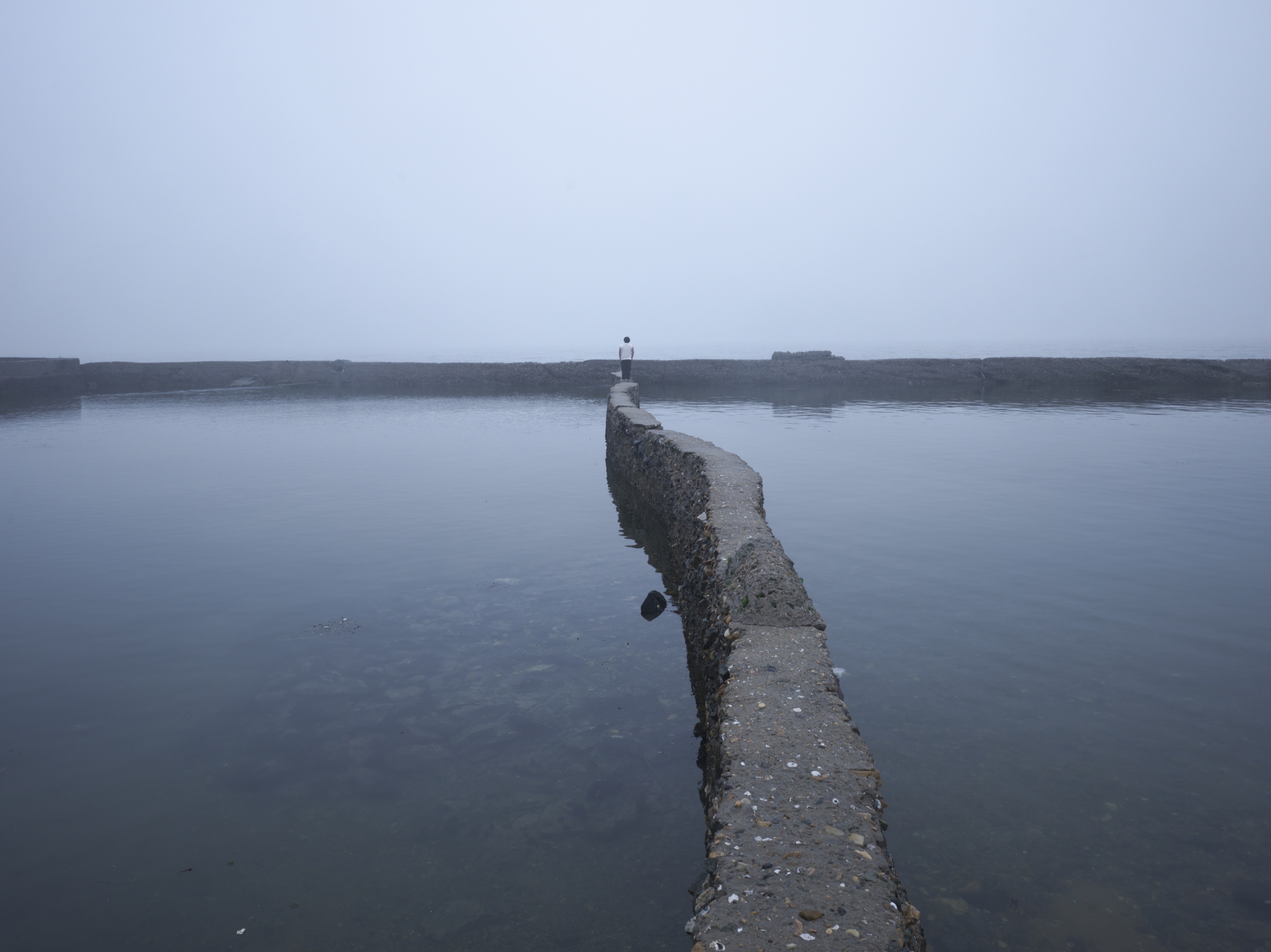
Me and the Sea began with a simple question:Where should I go?
The artist places himself among mountains and seas, in the wilderness and at the margins of civilization, always facing the world with his back to us. The figure has no features, no expression, and no fixed identity; the individual is reduced to a coordinate within the landscape, a silent sign. He stands there before the sea, but also before forests, mist, rock, tidal flats, and the traces that human civilization has left—or is still leaving—behind.
At first, it was a dialogue between one person and the sea.
Standing before the sea, the person asks where he should go, what it means to exist, and how to live with his predicament. The sea remains silent. It does not know the answer, and neither does he. Yet by simply being there, the sea holds his confusion, solitude, and search. Perhaps being held is already a kind of answer.
As the work continued, this dialogue gradually moved beyond the boundary of personal experience.
The sea does not face only one person. It has faced countless people, ages, and civilizations that have already disappeared. People stood on these shores a thousand years ago; people still stand here today. Ports, embankments, freighters, cities, and ruins emerge and vanish, while on the longer scale of time the sea continues to rise and fall.
Me and the Sea therefore turns to another question:When the brevity of an individual life and the long yet still finite duration of a civilization are both placed before the scale of the sea, what do we mean?
On this scale, a human life is brief, and a civilization is no less fragile. We build embankments, make vessels, and cross oceans. Along the shore we leave rubbish, architecture, war, and the marks of history. We try to name the world, alter it, even conquer it. Yet in the end, perhaps humanity is only passing through.
The sea witnesses all of it, without judgement.
It faced the ancients, just as it faces us today. Perhaps in a future too distant to imagine, when our civilization has long disappeared, an individual from another civilization will once again stand by the sea, face the same tides, and ask a question much like ours.
Thus the “me” in Me and the Sea gradually ceases to refer only to the artist. This faceless figure may be anyone: a particular life, but also humanity in miniature within an immense world. The “sea” is no longer merely a natural landscape. It becomes a longer form of existence—silent and encompassing, outlasting individual lives and passing through the rise and fall of civilizations.
The series comprises nine images: Into the Sea, Meadow, In the Woods, Stone Path, Rocky Ridge, Mist, Tidal Flat, Embankment, and Within the Frame. The figure always stands; the world remains immense. The work offers no answer. Across landscapes shaped by nature and civilization, it continues to ask the same question.
We set out from different shores, bound for the same sea.
Dynasties may vanish. Cities may become ruins. The traces of civilization may be worn smooth by time. Perhaps hundreds of millions of years from now, an individual from another civilization will stand by the sea, lift the recording device of their age, and make a picture of themselves with the sea.
And in that moment, they may still be facing the sea that once stood before us.
Me and the Sea is unfinished—waiting for snow, waiting for the years.